
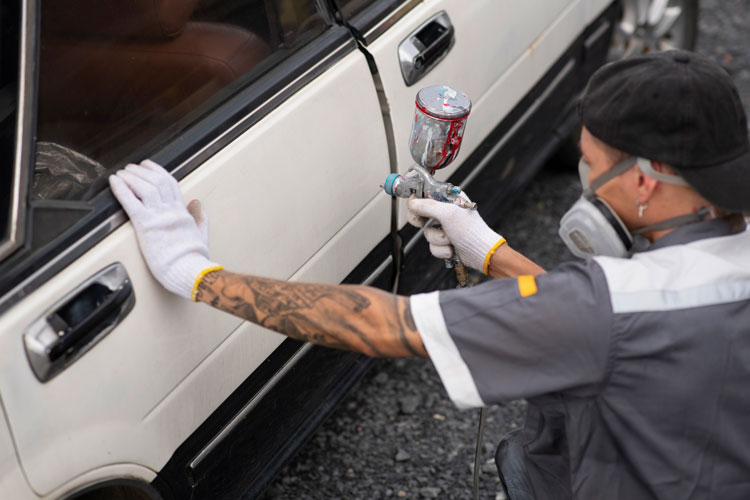
At Cutting Edge Collision Center, our status as a Hagerty Preferred Classic Car Body Shop means we’ve mastered one of the most challenging aspects of vintage vehicle restoration: perfect paint matching. Whether you’re restoring a 1967 Mustang, maintaining a pristine ’57 Chevy, or repairing collision damage on your classic Corvette, achieving an accurate color match requires expertise that goes far beyond modern automotive painting.
Why Vintage Paint Matching Is So Complex
Modern vehicles use computerized paint formulas with consistent factory codes, making matching relatively straightforward. Classic cars present unique challenges that demand specialized knowledge and techniques.
Discontinued Paint Formulas: Many original paint formulas from the 1950s-1980s are no longer manufactured. Paint companies have changed chemistry, eliminated certain pigments, and reformulated colors dozens of times over decades.
Age and Oxidation: A 40-year-old paint job has been exposed to Arizona’s intense UV rays, extreme heat, and environmental pollutants. The color you see today isn’t the original factory color—it’s faded, oxidized, and chemically altered.
Original Paint Technology: Vintage vehicles often used single-stage lacquer or enamel paints that behave completely differently from modern basecoat-clearcoat systems. Matching these finishes requires understanding historical paint technologies.
Factory Color Variations: Even when new, factory paint jobs varied significantly. Early production runs might differ from late-year models. Different assembly plants sometimes used slightly different paint batches.
The Paint Matching Process for Classic Cars
Step 1: Color Identification: We start by locating your vehicle’s original paint code, typically found on door jamb tags, firewall plates, or trim tags. However, this is just the beginning. Factory codes tell us the intended color, not necessarily what’s on your vehicle after decades of aging.
Step 2: Visual Assessment: Our experienced restoration technicians examine your vehicle under various lighting conditions—natural sunlight, fluorescent shop lights, and LED work lights. Colors appear differently depending on the light source, so we need to match your paint under all lighting conditions.
Step 3: Spectrophotometer Analysis: We use advanced spectrophotometry to measure the exact wavelengths of your paint’s color. This technology reads the paint’s color digitally, providing precise data on hue, saturation, and value. For metallic and pearl finishes, we analyze the paint from multiple angles to capture how the color shifts.
Step 4: Test Panel Creation: We never spray directly on your classic car without testing first. We create test panels matching your vehicle’s original paint substrate and condition. This allows us to adjust the formula until we achieve a perfect match.
Step 5: Environmental Matching: Arizona’s climate significantly affects paint appearance. What looks perfect in our climate-controlled shop might look different under Tucson’s intense midday sun. We verify color matches in multiple lighting and temperature conditions.
Common Vintage Paint Challenges
Tri-Coat and Candy Paints: Popular in the 1960s-70s, these complex finishes layered multiple translucent colors. Matching requires recreating the exact sequence and thickness of each layer.
Metallic Flake Orientation: Vintage metallics used larger flakes than modern paints. The size, type, and distribution of metallic particles drastically affect color appearance. We must match not just color but also flake characteristics.
Single-Stage Lacquer: Many classic cars wore beautiful single-stage lacquer that buffed to a deep shine. Modern clearcoat systems look different. For authentic restorations, we can still work with traditional lacquer systems when appropriate.
Color-Shifting Pearls: Some vintage luxury cars featured early pearl finishes that shift color depending on viewing angle. These are incredibly challenging to match and require specialized pigments.
Arizona-Specific Considerations
Tucson’s climate poses unique challenges for matching vintage paint. Our intense UV exposure causes rapid paint fading and oxidation. Classic cars garaged in Arizona may have a dramatically different color than their original factory finish, even if the paint is original.
Desert heat accelerates chemical breakdown in vintage paints. Colors warm over time, with reds shifting toward orange and blues developing greenish casts. We account for these regional aging patterns when matching paint for Arizona classic cars.
Monsoon season humidity and winter temperature swings affect how paint cures and ages. We adjust our formulations based on when the work is performed and how the vehicle will be stored.
Partial Panel vs. Full Panel Painting
Spot Repairs: For small damage areas, blending new paint into existing finish requires exceptional skill. We feather edges and carefully blend the repair area so the transition is invisible. This is most successful when the original paint is in good condition.
Full Panel Repainting: When painting entire panels on your classic car, we still must match adjacent panels perfectly. Door jambs, under trim pieces, and other protected areas retain the original color and serve as our matching references.
Complete Repaints: Some restorations warrant returning the entire vehicle to factory-fresh color. This eliminates matching challenges but requires meticulous color research to achieve period-correct accuracy.
Technology Meets Traditional Craftsmanship
While we use modern technology like spectrophotometers and computerized mixing systems, vintage paint matching remains an art. Our technicians’ trained eyes catch subtle color shifts that computers miss. Experience with how different pigments behave, understanding of vintage paint chemistry, and knowledge of manufacturer-specific color characteristics cannot be replaced by technology alone.
As a Hagerty Preferred Shop, we maintain the highest standards for classic car work. This certification recognizes our expertise in proper restoration techniques, period-correct materials, and specialized knowledge of vintage vehicles.
Maintaining Your Classic Car’s Paint
After we’ve achieved a perfect match, protect your investment. Garage your classic whenever possible, especially during Arizona’s intense summer months. Use quality car covers when outdoor storage is necessary. Apply UV-protective waxes and sealants designed for your paint type—vintage single-stage finishes need different protection than modern clearcoats.
Regular washing removes corrosive environmental contaminants. Avoid automatic car washes that can scratch delicate vintage paint. Hand washing with vintage car-appropriate products preserves your finish.
Trust the Experts
Paint matching for vintage vehicles doesn’t work for a general auto body shop. It requires specialized equipment, extensive experience with classic cars, access to historical paint databases, understanding of vintage paint chemistry, and the artistic eye to achieve perfect results.
At Cutting Edge Collision Center, we’ve earned Hagerty Preferred status by demonstrating excellence in classic car restoration and custom automotive painting. Whether you need collision repair, panel refinishing, or complete paint restoration for your vintage vehicle, our technicians have the expertise to match your classic car’s color perfectly.
Contact us at 520-624-2787 to discuss your classic car painting project. As Tucson’s trusted Hagerty Preferred shop, we’ll treat your vintage vehicle with the specialized care it deserves.